A Warning About LinkedIn Phishing
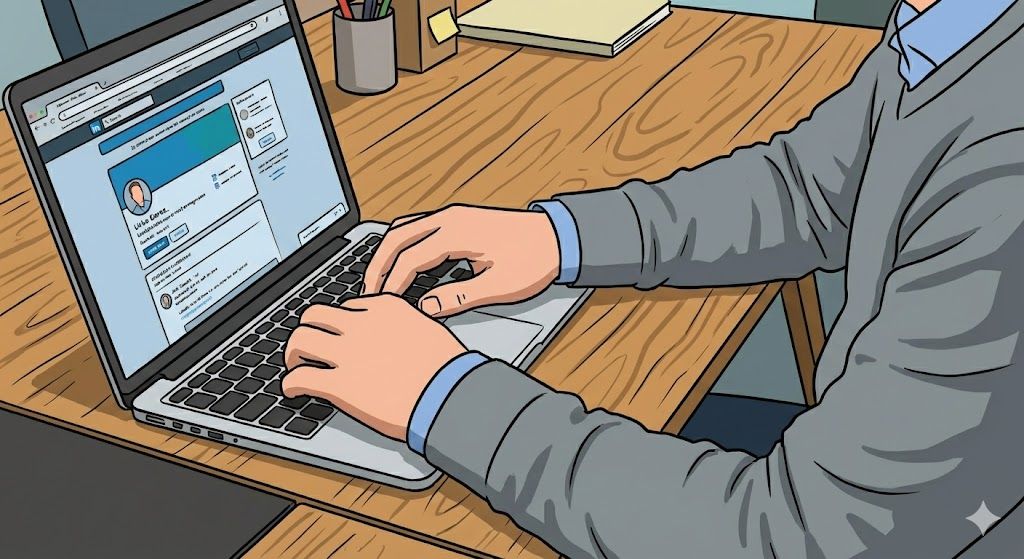
Have you ever received a message from a recruiter where something just did not feel quite right?
Over the past few months, I have spent more time than usual on LinkedIn, and I know I am not alone.
Last July, my role at Standard Fiber came to an end after a long stretch there. Not long after, I joined FIT Solutions. It is a great company with good people, and I am genuinely glad I had the opportunity. In the end, it just was not the right long term fit for me.
Then the holidays arrived. Hiring slowed down, conversations paused, and now here we are at the start of a new year. So after all of that, and like many others, I find myself back here on LinkedIn figuring out my next steps.
As I have been connecting with people, I have noticed a pattern that is worth looking at.
Some messages come from profiles that look like recruiters or hiring contacts, but the interaction quickly shifts to asking for a resume or personal details without much context. Sometimes nothing is obviously wrong, but something feels off.
In many cases, this is a form of phishing.
The idea behind phishing is not always to steal something immediately. Often the goal is to gather information that can be used later. A resume can include your full name, contact details, work history, locations, and the tools or systems you have worked with. That is a lot of personal information to hand over too quickly.
If you are actively job hunting, here are a few things that have helped me slow down and think things through.
First, take a moment to look at the profile reaching out. Do they have a clear work history and a real company listed? Do their connections and activity seem consistent?
Second, notice how quickly they ask for your resume. Many legitimate recruiters are happy to have a short conversation first and explain the role before requesting documents.
Third, check the company outside of LinkedIn. A quick search can often confirm whether a role or organization is real.
Fourth, pay attention to where they ask you to send your resume. If someone claims to represent a company but asks you to email your resume to a generic address like hr-company@outlook.com or hr-company@gmail.com, that is usually a red flag. Legitimate companies almost always use their own domain for hiring communications.
Fifth, share less early on and trust your instincts. A brief summary of your background is usually enough until trust is established. If something feels rushed, vague, or uncomfortable, it is okay to pause or move on.
Most people on LinkedIn are there for the right reasons, and it is still a valuable place to network and find opportunities. This is just a reminder to move carefully, especially during times of transition when we are more open and more exposed.
If you are job searching right now, you are not alone.