The Future of AI
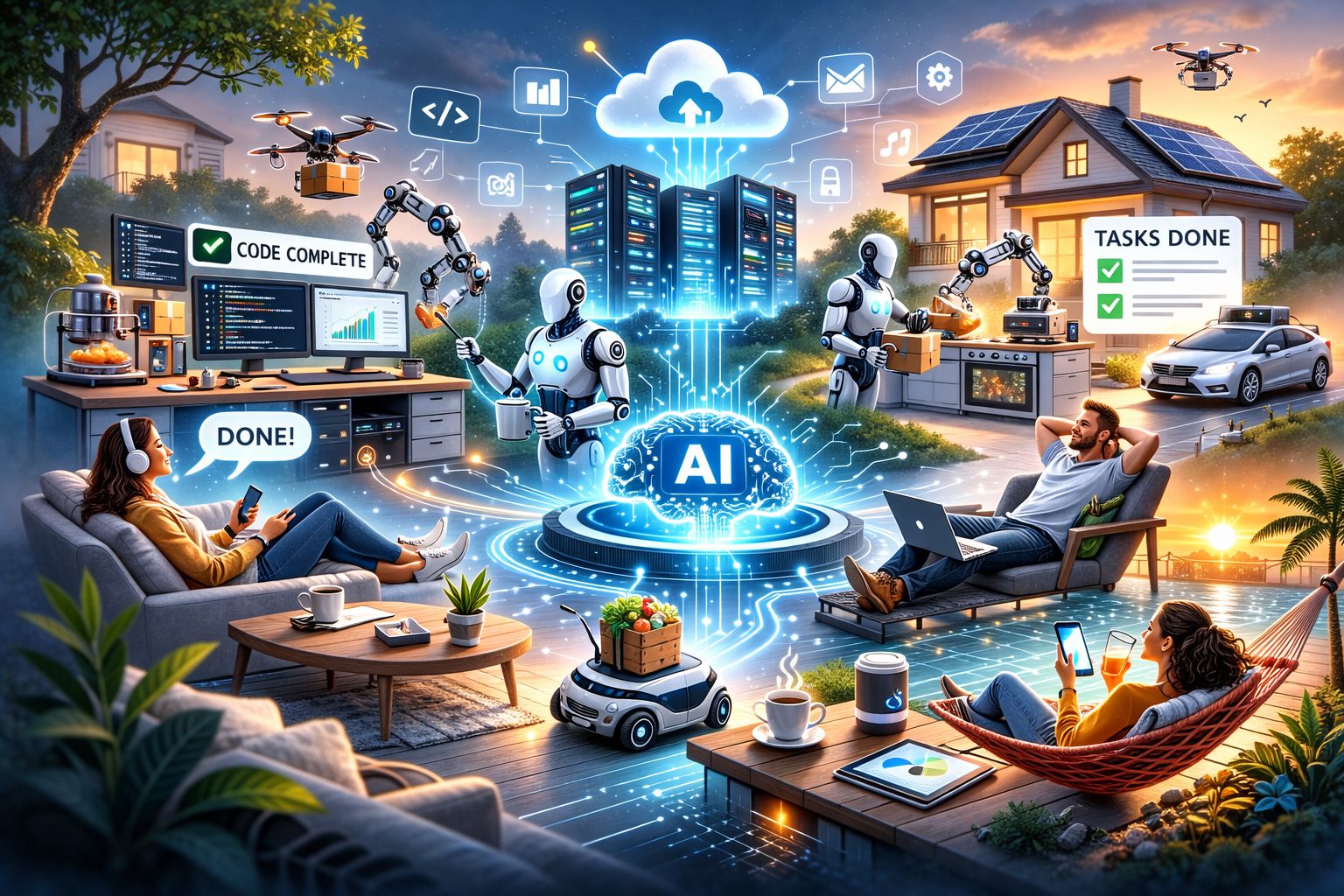
What is the future of AI, and is it really coming for everyone’s job? I do not have a crystal ball, but one thing is clear. Things are evolving fast.
For the past few years, AI has largely worked in a simple pattern. You write a prompt, and it returns a result. It has already become extremely effective at helping write Python, PowerShell, and other kinds of code, generate applications, and accelerate development. Tools like Codex (whether by macOS app, CLI, or VS Code extension), Claude Code, and other AI-assisted development environments have made it possible for almost anyone to build software and automate workflows.
But a major shift is now underway.
Emerging agent-based AI projects demonstrate a new model. Instead of simply responding to prompts, AI systems can now be configured to follow rules, make conditional decisions, and execute multi-step tasks. This changes the model from passive tool to active assistant, capable of operating with defined goals and behaviors.
Competition is accelerating rapidly. OpenAI, Anthropic, and others are expanding AI capabilities across desktop, mobile, and development environments. The direction is clear. AI is moving beyond isolated prompts toward persistent systems that assist continuously and integrate directly into daily workflows.
We have seen this pattern before. The “cloud” was once viewed primarily as a new way to deliver storage and compute over the internet. Today it represents the backbone of global computing infrastructure. Massive datacenters power everything from enterprise workloads to personal storage. Companies like NVIDIA have seen explosive growth in their data center business, reflecting the massive demand for AI infrastructure worldwide.
But the next phase may also become more personal.
As hardware continues to advance, local machines are becoming increasingly capable of running sophisticated AI workloads. This raises an interesting possibility. What happens when every individual has their own personal AI system running locally? A system capable of assisting, automating, and coordinating tasks on their behalf.
A computer on every desk was once the goal. Now it may be an intelligent assistant on every desk.
This raises important questions. Not just about jobs, but about how work itself evolves. The people who understand these systems, guide them, and integrate them effectively will be in a strong position moving forward.
These are simply observations from someone working in IT, watching the transition unfold in real time, and preparing for what comes next.